ARTS ENTREPRENEURSHIP &
TECHNOLOGY:
THE ART OF BUSINESS AND BUSINESS OF ART
The Hero's Odyssey in Arts Entrepreneurship & Technology: A Renaissance in the Classical Liberal Arts &
Free Market Economics:
Ideals in
Innovation
What do you get when you combine an interest in the arts with an
interest in entrepreneurial ventures and an interest in cutting-edge
technology?
Dr. Elliot McGucken at the University of North Carolina at Chapel Hill
says the result is someone he calls an artistic entrepreneur. Thus, he's
received a grant from the Carolina Entrepreneurial Initiative to launch
a class called Artistic Entrepreneurship.
Known as "Dr. E" to his students, McGucken teaches physics and
programming and has published a poetry book, a novel, a collection of
essays, several scientific articles and - huh? - poetry in The Wall
Street Journal.
Since 1995, he's run an online site called jollyroger.com that pays
homage to the "Great Books" and serves as a forum for those who worship
excellence in literature.
As for the new class, McGucken says it "will invite writers, artists,
directors, producers, musicians, business majors, and computer
programmers to work together in building artistic ventures."
"It'd be great to build a couple hip artistic ventures in our own
backyard," McGucken tells Biz. "Why let New York and L.A. have all the
fun?"
Ecce deus fortior me, qui veniens dominabitur michi. --Dante
If more of us valued food and cheer and song above hoarded gold, it
would
be a merrier world. -- J.R.R. Tolkien
ARTISTIC ENTREPRENEURSHIP & TECHNOLOGY
Teresea Ciulla of Entrepreneur Magazine blogs, "Can you actually
make
your passion your profession? According to Dr. Elliot McGucken, a
professor at the University of North Carolina, Chapel Hill (and now
Pepperdine University), who's teaching
the university's first "Artistic Entrepreneurship & Technology 101"
class,
the answer just may be yes. McGucken's class, which is comprised of a
group of 45 students majoring in law, business, art, computer science,
journalism and music, focuses on teaching students about creating value
over just making money, about letting their higher ideals guide the
bottom
line. After all, as McGucken says, "Successful companies aren't
successful
because they make money--they're successful because they create value."
Class projects range from a classical music video to a hip hop
curriculum
and textbook to an online art gallery to a freshman's record label
that's
signed more than ten bands to a social network being programmed by three
computer science majors. Students are seeing that to the degree they
succeed in creating useful art and ventures, they'll be able to support
their passions with a profitable business. And isn't that what we're all
really striving for? To find an excitement in our work in order to beat
back the dullness of the typical 9-to-5 routine? Looks like McGucken's
found a way to inspire a new generation of artistically minded
entrepreneurs to follow their passions--and make a living."
Reviving the Moral Premise in Hollywood and the Heartland: on Main
Street
and Wall Street: in Screenplays and Business Plans.
"The classic system--owner's capitalism, had been based
on a dedication to serving the interests of the corporation's owners in
maximizing return on their capital investment. But a new system
developed--manager's capitalism--in which, Pfaff wrote, "The corporation
came to be run to profit its managers, in complicity if not consiracy
with
accountants and managers of other corporations." --John C. Bogle,
Founder and Former Chairman of The Vanguard Group, The
Battle for The Soul of Capitalism
"There's a difference between us.
You
think the people of this land
exist to provide you with position. I think your position exists to
provide those people with freedom. And I go to make sure that they have
it." --William Wallace in Braveheart, by Randall Wallace
The act of entrepreneurship is based upon the common
moral
premise
that forms the foundation of the above three quotes--individuals
embarking
on a hero's odyssey so as to better serve their peers.
Einstein wrote,
"The highest principles for our aspirations and judgments are given to
us
in the Jewish-Christian religious tradition. It is a very high goal
which,
with our weak powers, we can reach only very inadequately, but which
gives
a sure foundation to our aspirations and valuations. If one were to
take
that goal out of its religious form and look merely at its purely human
side, one might state it perhaps thus: free and responsible development
of
the individual, so that he may place his powers freely and gladly in the
service of all mankind.
There is no room in this for the divinization of a nation, of a class,
let
alone of an individual. Are we not all children of one father, as it is
said in religious language? Indeed, even the divinization of humanity,
as
an abstract totality, would not be in the spirit of that ideal. It is
only
to the individual that a soul is given. And the high destiny of the
individual is to serve rather than to rule, or to impose himself in any
other way." --Albert Einstein, Einstein's Ideas and Opinions,
pp.41 - 49.
Here is Cyril's Abstract:
The psychology of entrepreneurship can be better
understood by comparing it to the hero's adventure (as well as the
trickster's) In mythology because myths are often seen as symbolic
representations of the psyche. The hero and the entrepreneur are found
to
be similar in their respective adventures, a three part sequence of
separation from the community, initiation into new creative powers and a
return to the community with a boon for his fellow citizens. Both are
creative, curious, energetic risk takers who are guided by mentors.
Entrepreneurship can be seen as a manifestation of a universal human
psychological condition, the desire for individual creativity.
VISUAL ARTS
Photography
Sculpture
Painting DRAMATIC ARTS
Acting
Directing
Producing MOTION PICTURES
Film
Movies
Documentaries
TV
Production Studio
Animation MUSIC
Bands
Record Labels
Distribution
Booking
Production Studio
Non-profit
Management PROGRAMMING
Linux /
Apache /
MYSQL /
PHP /
PERL / PYTHON /
Postnuke / Wordpress / PHPNuke / Oscommerce /Gallery /
Mambo / Joomla
TALENT AGENCIES
Acting
Music
Literary MODELING
Modeling Agency FASHION
Design
Runway
Branding WRITING
Screenwriting
Novels
Nonfiction
Poetry
Publishing BLOGS/BLOGGING VIDEO GAMES
Game Design
Game Production
Game Storytelling
Games & Movies SOCIAL NETWORKS
Friendsters
MySpaces
Facebooks YOUR VENTURE!
social network - fashion - publishing - photography - music - film - brand
Bob
Young founded Red Hat Linux, and he currently leads Lulu--a Raleigh venture
that empowers indy artists--writers, photographers, musicians, painters, creators, and more! Download Bob's free book on the philosophy
and business of Open Source here.
About Dr. E
Dr. E is an artistic entrepreneur. He founded jollyroger.com in 1995, and now runs over 30 sites. He presented Authena Open Source DRM/CMS at the Harvard Law School OSCOM, and 22surf was accepted to the Zurich OSCOM. Both Authena and 22surf are aimed at helping indie artists/creators. Dr. E
received a B.A. in physics from Princeton and a Ph.D. in physics from
UNC
Chapel Hill where his dissertation
on an artifical retina for the blind received several NSF grants and a Merrill Lynch
Innovations Award. The retina-chip research appeared in publications including Popular Science and Business
Week, and the project continues to this day. The New York Times deemed jollyroger.com "simply unprecedented," adding that the
site "teems with discussion, the kind that goes well beyond freshman lit 101." The Los Angeles Times referred to the classical portal as
"a lavish virtual community known as The Jolly Roger." Dr. E has published four books including two novels and a poetry
collection.
This class will be a odyssey towards realizing your dreams. Hopefully
many of you will continue this odyssey beyond the class. Contact Dr. Elliot McGucken for more
information.
Online
There are 3 unregistered users and 0
registered users on-line.
Sing in me, Muse, and through me tell the story
of that man skilled in all ways of contending...
He saw the townlands,
and learned the minds of many distant men...
and weathered many bitter nights and days
in his deep heart at sea . . .
Striving only to serve his men,
and return on home. . .
--Homer's Odyssey as translated by Robert
Fitzgerald (1961)
"I'm trying to free your mind, Neo. But I can only show you
the door.
You're the one that has to walk through it." --Morpheus, The
Matrix
"You have to trust in something — your gut,
destiny, life, karma, whatever. This approach has never let me down." -Steve
Jobs
"The stock exchange is a poor substitute for the Holy Grail." --Joseph
Schumpeter
"Tu ne cede malis sed contra audentior ito." --Virgil's Aeneid
(Ludwig von Mises' lifelong motto.)
The
New York Times reported, "McGucken's course (Arts
Entrepreneurship & Technology 101). . .
rests on the
principle that those who create art should have the skills to own it,
profit from it and protect it. "It's about how to make your passion
your profession, your avocation
your vocation, and to make this long-term sustainable," he said. --New
York Times Small BusinessPrinceton Club of Southern California: Hero's Odyssey
Renaissance Festival: Ideals in
Innovation: The
Hero's Odyssey Entrepreneurship Festival
with Dr. E aims to
provide students, artists, and entrepreneurs with the inspiration
and tools to make their
passions their professions--to protect and profit from their ideas--to
take ownership in their careers and creations. This entreprenuership
event celebrates the
ultimate Renaissance Man--Leonardo da Vinci--while saluting "hero's
odyssey mythology" in the
realms of screenwriting, videogames, film, academia, and
robotics--robots inspired by da Vinci's designs.
Don't Count on It! Reflections on
Investment
Illusions, Capitalism, "Mutual" Funds, Indexing,
Entrepreneurship, Idealism, and Heroes : "Vanguard: Saga of
Heroes (Chapter 23) presents a very different interpretation than
you might expect from its title. This chapter is based on a lecture I
presented to Pepperdine University (CA) students, at the request of
Professor Elliot McGucken, as part of his course The Hero's Odyssey
in Arts Entrepreneurship & Technology 101. "Dr. E" relies heavily
upon such classics as Homer's Odyssey and Dante's Inferno,
and honors me by including with these classics my own The Battle for
The Soul of Capitalism. This essay focuses on Vanguard's odyssey, a
voyage punctuated with challenges, narrow escapes, and ultimate
fulfillment. I conlude by urging introspection upon our financial
leaders, an idea that failed to get much traction back in 2007 when it
might have helped. But these leaders were simply making too much money,
taking too much risk, and showing too little concern about the crises
then building. . . -p. 436: "It's no mean task to measure up to the high
appraisal of my career
that
has been so generously expressed by Dr. Elliot McGucken. That he has,
remarkably, placed my 2005 book, The Battle for the Soul of
Capitalism, on the same reading list as The Odyssey--let
alone the same planet!--adds even more to my burden in meeting the
expectations of those who are aware of this background. . ."
--Vanguard,
Saga of Heroes, p. 469, Don't Count on It published 2010 by
John Wiley & Sons
BusinessWeek Reports: Where Entrepreneurship Connects to the Classics
"Elliot McGucken, a professor of entrepreneurship at Pepperdine
University, bemoans that "a lot of schools have dismissed the idea of
teaching the great books." In a recent lecture at Pepperdine, McGucken
points out that that one lesson of the classics is, "Chance favors the
prepared mind. Instead of viewing risk as a bad thing, we can also view
it as a good thing."
The classics inspired America's Declaration of
Independence, which
McGucken sees as an entrepreneurial document. Life has a way of "calling
us to adventure," he concludes."
--BusinessWeek
Video for Dr. E's upcoming book The Hero's Odyssey Entrepreneurship
Code
of
Honor."Go Forth and Make a Name For Yourself in Story"
--Homer's Odyssey Begin Today! Audentes Fortuna Juvat (Fortune Favors the Bold)
--Virgil's
Aeneid
A great odyssey awaits you, whence you will render your ideals and
dreams
real in a brave new venture, via the humble, heroic actions
definining your business and brand. "Go forth and make a name for
yourself in story," the goddess
Athena called Odysseus's son Telemachus to adventure in Homer's
Odyssey
2800 year ago,
and so too is it time for you to join the classic fellowship in
your epic hero's
odyssey into entrepreneurship.
"Story is the soul of a work," wrote
Aristotle in his Poetics, adding, "a story is not about men,
but
about their actions." Thus action will define
your business, as you make a name (your brand) for
yourself in story. To exalt the long-term value of your
enterprise, it
makes sense that you
must begin with enduring values--living by The Hero's Odyssey
Mythology
Code of Honor,
for
there is no surer ticket to the greater wealth of the hero's odyssey
than virtous action, indeed--passage cannot be bought by any
other
means.
Honor makes a great part of the reward of all honorable professions.
--Adam Smith's
Wealth of Nations
Albert Einstein: “Money only appeals to selfishness and always tempts
its owners
irresistibly to abuse it. Can anyone imagine Moses, Jesus, or Gandhi
armed with the money-bags of Carnegie?”
Blake Mycoskie of TOM'S SHOES: Stories are the most primitive and purest
form of communication. The most enduring and galvanizing ideas and
values of our vivilization are embedded in our stories, from those of
Homer, whose preliterate epic
poems united the Greeks' national spirit, and Virgil, whose poems did
the same for the Romans, to those told by Jesus, who used parables to
teach his disciples. It seems to be in our genetic makeup to capture
our best ideas in stories, to enjoy them, to learn them, and to pass
them on to others. . . When you have a memorable story about who you are
and what your mission is (telling of the ideals you're rendering real
via action,
just as Achilles, Odysseus, and Socrates acted to render
their soul's ideal
real
in
striving towards arete/excellence), your success no longer depends on
how experienced you are or how many degrees you have or who you know. A
story transcends boundaries, breaks barriers, and opens doors. It is a
key to not only starting a business but also to clarifying your own
personal identity and choices. . . A story evokes emotion, and emotion
forges a connection. . . (Companies) can no longer rely on simple,
straightforward ad campaigns, the kind portrayed on the TV show Mad Men.
. . At TOMS, our story is very simple: We make great shoes and give away
a pair to a child in need for every pair we sell. . . We spend every day
thinking about new ways to spread our story. Blake Mycoskie--Start
Something That
Matters, Find Your Story, Chapter 2
Jack Bogle: In Enough: True Measures of Money, Business, and
Life,
I
warn of too much cost and not enough value; too much speculation and not
enough investment; too much complexity and not enough simplicity; too
much counting and not enough trust; too much salesmanship and not enough
stewardship; and so on; even too many 21st century values and not enough
18th century values.those values exemplified by the great philosophers
of The Age of Reason.men such as Rousseau and Hume and Burke, and Adam
Smith, and Tom Paine, who in turn helped shape the minds of our Founding
Fathers--especially Washington, Jefferson, Madison, Franklin, and
Hamilton. And all of these men, in turn, stood on the shoulders of
earlier giants such as Socrates, Plato, and Aristotle. (Some of them are
likely quoted in the halls you walk here each day. Read their words!
Think about them! Gain their wisdom!)
It is the values of these giants of Western Civilization that have
inspired me.yes, as you well know, the dead teach the living (the motto
on Roxbury Latin's crest is mortui vivos docent--the dead teach
the
living--to speak out on the ethical failings of so many of the leaders
of our corporations and our money managers, our regulators and our
legislators. What we refer to as Wall Street has become a casino, one in
which enormous--but momentary--changes in short-term stock prices are
treated as intrinsic reality, rather than ephemeral perception. Think
about it. All of today's frenetic trading simply pits one speculator
against another, with the only winners being the croupiers--the traders,
the brokers, the investment bankers, and the money managers who
facilitate those trades. If that undeniable reality reminds you of
gambling in Las Vegas, or going to the race track, or hoping to hit the
jackpot in the state lottery, well, you see where I'm coming from.
The stock market casino has become a giant--and costly--distraction to
the
serious business of investing. Greed, recklessness, and self-interest
ride in the saddle of today's capitalism. . .
--
http://www.vanguard.com/bogle_site/sp20090330.html
Henry David Thoreau: The student may read Homer or Aeschylus in the
Greek without danger of dissipation or luxuriousness, for it implies
that he in some measure emulate their heroes, and consecrate morning
hours to their pages. The heroic books, even if printed in the character
of our mother tongue, will always be in a language dead to degenerate
times; and we must laboriously seek the meaning of each word and line,
conjecturing a larger sense than common use permits out of what wisdom
and valor and generosity we have. The modern cheap and fertile press,
with all its translations, has done little to bring us nearer to the
heroic writers of antiquity. They seem as solitary, and the letter in
which they are printed as rare and curious, as ever. It is worth the
expense of youthful days and costly hours, if you learn only some words
of an ancient language, which are raised out of the trivialness of the
street, to be perpetual suggestions and provocations. It is not in vain
that the farmer remembers and repeats the few Latin words which he has
heard. Men sometimes speak as if the study of the classics would at
length make way for more modern and practical studies; but the
adventurous student will always study classics, in whatever language
they may be written and however ancient they may be. For what are the
classics but the noblest recorded thoughts of man? They are the only
oracles which are not decayed, and there are such answers to the most
modern inquiry in them as Delphi and Dodona never gave. We might as well
omit to study Nature because she is old. To read well, that is, to read
true books in a true spirit, is a noble exercise, and one that will task
the reader more than any exercise which the customs of the day esteem.
It requires a training such as the athletes underwent, the steady
intention almost of the whole life to this object. Books must be read as
deliberately and reservedly as they were written. It is not enough even
to be able to speak the language of that nation by which they are
written, for there is a memorable interval between the spoken and the
written language, the language heard and the language read. The one is
commonly transitory, a sound, a tongue, a dialect merely, almost
brutish, and we learn it unconsciously, like the brutes, of our mothers.
. . No wonder that Alexander carried the Iliad with him on his
expeditions in a precious casket. A written word is the choicest of
relics. It is something at once more intimate with us and more universal
than any other work of art. It is the work of art nearest to life
itself. It may be translated into every language, and not only be read
but actually breathed from all human lips;- not be represented on canvas
or in marble only, but be carved out of the breath of life itself. The
symbol of an ancient man's thought becomes a modern man's speech. Two
thousand summers have imparted to the monuments of Grecian literature,
as to her marbles, only a maturer golden and autumnal tint, for they
have carried their own serene and celestial atmosphere into all lands to
protect them against the corrosion of time. Books are the treasured
wealth of the world and the fit inheritance of generations and nations.
Books, the oldest and the best, stand naturally and rightfully on the
shelves of every cottage. They have no cause of their own to plead, but
while they enlighten and sustain the reader his common sense will not
refuse them. Their authors are a natural and irresistible aristocracy in
every society, and, more than kings or emperors, exert an influence on
mankind. When the illiterate and perhaps scornful trader has earned by
enterprise and industry his coveted leisure and independence, and is
admitted to the circles of wealth and fashion, he turns inevitably at
last to those still higher but yet inaccessible circles of intellect and
genius, and is sensible only of the imperfection of his culture and the
vanity and insufficiency of all his riches, and further proves his good
sense by the pains which be takes to secure for his children that
intellectual culture whose want he so keenly feels; and thus it is that
he becomes the founder of a family. . . The works of the great poets
have never yet been read by mankind, for only great poets can read them.
--Henry David Thoreau in Walden (All the above passages, and far,
far more, appear in Dr. E's book The Hero's
Odyssey Entrepreneurship Code of Honor)
In Dr. E's class, we read the classical authors referred to by
Tom, Joseph, Jack, and Henry David Thoreau above, and an added benefit,
in this era of $200, classics-free textbooks and unprecedented student
debt,
is that all these epic works may be downloaded for free or purchased in
quality-bound
editions with scholarly notes and introductions from the world's leading
experts--all
"for a few dollars more."
Too many students are
graduating
with too much debt these days--debt that shackles them to
servitude right when
they should be set free to follow their ideals and dreams and render
them real in art and entreprneurship. Venture Capitalist Peter Thiel,
the founder of Paypal and primary investor in Facebook, also laments the
gutting of the classical, epic curriculum accompanied by skyrocketing
tuitions:
Openmarket.org: "University administrators are the equivalent of
subprime
mortgage brokers," notes Facebook investor (and founder of Paypal) Peter
Thiel, "selling you a story that you should go into debt massively, that
it's not a consumption decision, it.s an investment decision. Actually,
no, it's a bad consumption decision. . . Vast amounts of money are spent
by American colleges on useless administrators and politically correct
indoctrination. For many people, college no longer pays off as an
investment.
Forbes.com: For a consummately educated guy, Peter Thiel (paypal
founder) is derisive about American colleges and universities. In his
view they've become too politically correct (he and David Sacks argued
as much in their 1997 book, The Diversity Myth), hobbling the hard
sciences as well as the humanities. Schools have created a classic
bubble, says Thiel: Inflation-adjusted spending on administration per
student jumped 61% between 1993 and 2007, while the number of
administrators per 100 students rose 39%, reports the Goldwater
Institute. Student debt levels fill Thiel with disgust. "It is pretty
much the only form of indentured servitude in the U.S.," he says.
.
http://www.forbes.com/forbes/2011/0214/features-peter-thiel-social-media-life-after-facebook_5.html
The below works, which are taught less and less as tuitions rise,
can all be downloaded for free or purchased for a few dollars. They
stand ready to ride alongside you as lifelong friends and mentors in all
your ventures, as sure
as
Thomas Jefferson in his later years again turned to the books he
first enjoyed
as a teen, writing, "They all fall off, one by
one, until we are left with Virgil and Homer, and perhaps Homer alone."
Dr. E is working on presenting the best editions/translations of
the "Hero's Odyssey Mythology" books he
has used in his classes.
1. Homer's Iliad
2. Homer's Odyssey
3. Exodus
4. Virgil's Aeneid
5. Socrates' Apology
6. The Book of Matthew
7. Plato's Repulic
8. Dante's Inferno
9. The Declaration of Independence
10. The Constitution
11. John Milton's Paradise Lost
12. Shakespeare's Hamlet
13. Newton's Principia
14. Adam Smith's Wealth of Nations and Theory of Moral
Sentiments
15. The Stoics--Zeno, Diogenes, Cicero, Seneca, Epictetus, Marcus
Aurelis
16. Ludwig von Mises' A Theory of Money and Credit
17. F.A. Hayek's The Road to Serfdom
18. Herman Melville's Moby Dick
19. Einstein's The Meaning of Relativity
21. Jack Bogle's The Battle for The Soul of Capitalism, which we
have traditionally read alongside Homer's Odyssey at the
beginning of every class.
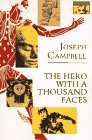
20. Joseph Campbell's The Hero With a Thousand Faces
21. Christopher Vogler's The Writer's Odyssey
22. Guy Kawasaki's The Art of the Start
Wisdom from all the above books (and far, far more) are exalted in Dr.
E's The Hero's
Odyssey Entrepreneurship Code of Honor.
The transcendant power of Hero's Odyssey Mythology unites a
diverse array of endeavors about a common, ideals-based foundation. In
studying epic mythology, we are studying the fundamentals of art, law,
story, business,
poetry,
marketing, and branding; we are studying those greater investments
which alone
endure over
time--those overarching ideals and "codes of honor" that make us
renaissance men (and women)
"skilled
in
all ways of contending," as
Homer described Odysseus; we are studying honor, Arete, virtue, and
excellence--the very source of all enduring welath.
Consider the
entrepreneur
seeking to invest their art and life in the realm of filmmaking--
although
screenwriting,
forming/ incorporating/ branding a
production company, recruiting a cast and crew, securing intellectual
property,
shooting
the film, getting it to market, and publicizing the film
are disparate tasks, each chapter is yet united in theme, via the hero's
odyssey monomyth. While the technological details (the body) will
change, the
grander story (the soul) throughout all realms of noble human endeavor
remains
essentially the same, and thus all ventures may be exalted by the
classical
ideals
found within the "Hero's Odyssey Code
of Honor."
Thus
a
most
efficient, transcendant, enduring, and
all-encompassing
education consists not of going into vast debt for a classics-free
BA, MBA,
JD,
&
MFA, but in reading the Great
Myths--all of
which can be
downloaded for free or purchased for a few dollars--all of which are
exalted in my classes, books, and festivals, from Homer on down.
"Story
is the
soul of a work," and as story is
the unifying theme while the soul is immortal, those who wish to create
unified, lasting ventures must begin and end by honoring the
soul--that force that presents the ideals and dreams successful
entrepreneurs render
real via rugged, relentless action, in the humble service of
their peers.
Dr. E's The Hero's Odyssey
in Arts
Entrepreneurship & Technology
* 1.1 Departure (or Separation): Taking that
first step--blog your
vision.
o 1.1.1 The Call to Adventure: Artistic passions & dreams
o 1.1.2 Refusal of the Call: Is it practical?
o 1.1.3 Supernatural Aid: Use the force, Luke. The harder
you
work, the luckier you get.
o 1.1.4 The Crossing of the First Threshold: Business
structures / market research
o 1.1.5 The Belly of the Whale: The business plan, raising
funds, intellectual property
* 1.2 Initiation: Building the team, incorporating
o 1.2.1 The Road of Trials: Striving toward profitablitity
o 1.2.2 The Meeting with the Goddess: First customers!
Early
success!
o 1.2.3 Temptation: Seeking short-term profits over
long-term wealth.
o 1.2.4 Atonement with the Father: Competing or
collaborating
with the big guys--the Microsofts and Apples, the Hollywood studios
o 1.2.5 Realizing the core business Apotheosis
o 1.2.6 The Ultimate Boon: Newfound business acumen!
* 1.3 Return: It is all for naught without the road back!
o 1.3.1 Refusal of the Return: Don't lose site of the core
business!
o 1.3.2 The Magic Flight: Exit strategy! IPO or selling
the
company!
o 1.3.3 Rescue from Without: When business competition is
your
best friend.
o 1.3.4 The Crossing of the Return Threshold: The venture
is a
success!
o 1.3.5 Master of Two Worlds: You know what it takes--like
Richard Branson you can do it again.
o 1.3.6 Freedom to Live: Financial freedom to pursue your
dreams!!
"With my students, I make the point that when we conceive of a story, in
effect we become a Protagonist in our own story: The writing process.
Stumbling upon that initial story concept is like The Call To Adventure.
When we type FADE IN, we Cross The First Threshold. As we write, we
confront Trials (lose our way, lose our confidence) and Temptations (to
quit). And eventually as we get to FADE OUT, we emerge 'victorious' on
our own hero's odyssey. Given that, I guess I shouldn't be surprised to
find outfits like this
using Campbell's theories as business models."
--Go
Into the Story: The Web's #1 Screenwriting Blog
Every entrepreneurial
odyssey
follows the
Joycean Monomyth's epic
themes, from
"the
call to adventure (seeing the opportunity)," to "the refusal of
the
call (it would be too risky)", to "meeting the
mentor (finding inspiration from Branson/ Jobs/ Bogle/ Achilles/
Odysseus/ Aeneas--those
who
have
gone before)," to
"crossing the
threshold (Zuckerberg/ Jobs/ Gates dropping out of college)," to
"the
road of trials (raising funding/ securing IP/ forming the
fellowship),"
to
"the death (Jobs being fired from Apple/ Bogle being fired from
the
Wellington Fund/ Dante being exiled from Florence/ Aeneas losing it all
in the fall of Troy), to
"the resurrection (Jobs returning and reviving
Apple/ Bogle launching Vanguard/ Dante penning The Divine
Comedy in exile/ Aeneas founding Rome), to "the
odyssey
home (getting products to market--real artists ship!)"
with the
"ultimate boon (iphone/ ipad/ itunes / Vanguard index fund/
facebook),"
and perhaps the greatest reward of all--the
elixir of
life-enhancing, newfound
knowledge
and
wisdom. Yes--those more heroic entrepreneurs have ever been those who
served
the higher ideals over the bottom line.
For how "rich" would the
world
be
without science, art, and epic poetry? Without quantum mechanics there
would be no computers and thus no twitter nor droid phones nor
videogames; without art,
philosophy, and epic poetry there
would
be no liberty, for both Jefferson--liberty's modern poet--and
Socrates--the founding grandfather of philosophy and science, referenced
Homer as the prime mover. "Poetry is science's true father," stated
Goethe, and Jefferson wrote, "as we advance in life, they all fall off,
one by one, until we are left with Virgil and Homer, and perhaps Homer
alone." And Socrates, in choosing death over dishonor while
standing for Truth over politics before the Athenian jury,
cited the courage
of Achilles in Homer's Iliad, stating that he would never desist
from
teaching entrepreneurship's fundamental precept, that "virtue does not
come
from money, but money and every lasting good of man derives from
virtue," even if he had to die many times. I shared this passage from
Socrates' Apology, which all my classes read to witness how the
Homeric hero was internalized as the action was transformed from
external odysseys to the higher "battle for the soul"--I shared it
with
Jack Bogle, and you'll find in his book Enough. Steven
Jobs
and Sir
Richard
Branson also agree with Socrates--Jobs
stated, "You
know, our friends up north (Microsoft) spend over $5 billion a year on
R&D and yet these days all they seem to do is try to copy Google and
Apple. I guess it's a good example of how money isn't everything," and
Sir Richard echoing, "Entrepreneurship isn't about capital; it's about
ideas." And so it is that we open a class
concerning business, economics, and entrepreneurship by
reading Homer
alongside
Bogle's The Battle for The Soul of Capitalism, for ultimately all
these entities are not about the bottom line, but the higher ideals. As
Martin Luther King Jr. wrote, "If we are to go forward, we must go
back and rediscover those precious values - that all reality hinges on
moral foundations and that all reality has spiritual control."
The power of mythology is that it teaches
us of the rewards of character and honor--of living for our ideals and
dreams while serving our peers. During his keynote at the
Hero's Odyssey
Entrepreneurship Festival, Jack Bogle stated:
But
even
as I disclaim the credentials of the hero, of the leader, of the
business manager, and even of the entrepreneur, I shamelessly proclaim
my credentials as an idealist. Even more, I am an idealist who revels in
the values of the Enlightenment and holds high his admiration for the
brilliance and the character of the great thinkers, great doers, and
great adventurers of the 18th century, men (as it happens, in particular
our nation's Founding Fathers) who give birth to our modern world. I
confess to being immensely proud of the title of one of the chapters of
a biography of me that was published a decade ago: The 18th Century
Man
And those 18th century men harbored a vast knowledge
of,
and
love for, the classical myths, as sure as did Einstein
and George Lucas.
Mythology
teaches us
that we
are not alone in venturing forth on our own as just like Jobs and Bogle
only rose to their greater heights after being devastatingly fired at
the mid-point pinnacles of their careers, so too did Aeneas only
found Rome after he lost everything in the fall of Troy in Virgil's
Aeneid and was "forced across the threshold." Just like both
Jobs
and Bogle found themselves in a dark
woods with the familiar path gone, so too does Dante's Divine
Comedy open with, "Midway through the odyssey of life, I awoke in
a
dark woods, with the familiar path gone." Just like 50 Cent
rapped, "I gotta make it to heaven, for goin' through hell,"
Dante's
only path to Paradisio was on down through hell, as Virgil
stepped
forth to mentor him and lead him on, while in Dante's
real life, Virgil was Italy's primary poet, literally mentoring Dante's
composition. And
if Dr. E can teach you
anything, it is that Dante, Virgil, Socrates, and Homer all stand ready
to
mentor you too, as sure as they mentored Plato, Aristotle,
Jefferson and the Founding Fathers, Lincoln, T.S. Eliot, and Martin
Luther King Jr. Along this Odyssey, you will never be alone.
Mythology teaches us that
obstacles and
even failures
are but a natural part of the grander story, as Thomas Edison
quipped, "I did not fail 1,000 times in trying out wrong filaments for
the
lightbulb, but I took 1,000 steps towards the right one," just like the
greatest of Greeks Odysseus, whose mental facilities and
powers of strategerie were matched by his physcial prowess, took twenty
years to make it on home, whence he suffered shipwrecks, mutinies, and
the anger of Poseidon--the god of the sea--for having blinded the
Cyclops--the classic one-eyed bureaucrat who sees not the higher ideals,
but only the bottom line.
Mythology teaches us the
power of staying
true
to our passions, ideals, and dreams, for Virgil wrote in the
Aeneid,
"Love
conquers
all, so let us too surrender to love," and after Jobs was "forced
across the threshold" and fired from
Apple, he by and by emerged from the darkness of "the belly of the
whale," as he realized that he still loved what he did--he yet loved
innovation in the technological realms, and being fired had not
diminished his love one iota. Ultimately, Jobs' love "conquered
all," as he returned to Apple, revived it, and exalted it as the largest
company in America.
And so it is that
our passions and
dreams
are our greatest assetts, which can never be taken away nor dimished by
anyone other than ourselves. Even in
the darkness our ideals only glow more brightly, and Jobs', Aeneas',
and Bogle's love for idealism, elegant simplicity, and service lead to
the
founding of Pixar, NEXT (which was integrated into Apple when Jobs
returned), Rome, and Vanguard.
Long
ago, Homer
described
the entrepreneur in the opening of the Odyssey, which we read at
the
beginning of every class, alongside Jack Bogle's The Battle for The
Soul of
Capitalism:
Sing in me, Muse, and through me tell the story
of that man skilled in all ways of contending...
He saw the townlands,
and learned the minds of many distant men...
and weathered many bitter nights and days
in his deep heart at sea . . .
Striving only to serve his men,
and return on home. . .
--Homer's Odyssey
Email:
Arts
Entrepreneurship & Technology 101
A Renaissance in the Classical Liberal Arts & Economics: Ideals in
Innovation
The
New York Times reported, "McGucken's course (Arts
Entrepreneurship & Technology 101). . .
rests on the
principle that those who create art should have the skills to own it,
profit from it and protect it. "It's about how to make your passion
your profession, your avocation
your vocation, and to make this long-term sustainable," he said. --New
York Times Small BusinessThe Arts Entrepreneurs Educator's Network: Elliot launched
the ArtsEntrepreneurship.com
program at UNC Chapel Hill and he is
bringing it to Pepperdine University this fall. He received a B.A. in
physics from Princeton and a Ph.D. in physics from UNC Chapel Hill where
his dissertation on an artificial retina for the blind received several
NSF grants and a Merrill Lynch Innovations Award. The retina-chip
research appeared in publications including Popular Science and Business
Week, and the project continues to this day. Elliot presented Authena
Open Source DRM/CMS at the Harvard Law School OSCOM, and 22surf was
accepted to the Zurich OSCOM. Both Authena and 22surf are aimed at
helping indie artists/creators. He has published four books including
two novels and a poetry collection, and blogs on Artistic
Entrepreneurship for the Kauffman Foundation. . . Your Spring 2006
course,
The 45 Revolver: Artistic Entrepreneurship &
Technology 101, is somewhat iconoclastic when compared to other Arts
Entrepreneurship courses across the country. Can you briefly
describe
the class, your course philosophy and the design process?
The Chapel Hill Herald: The class is the first of its kind
to
incorporate
art, technology and business. Student
Feedback.
The Hero's Odyssey in Arts Entrepreneurship & Technology: Web 2.0/3.0
Arts Entrepreneurship: Make Your
Passion Your
"Profession: Dr. E @ SXSW:
Don't need no VC when you've got a PC." Not only has technology
revolutionized the production and distribution of content, but it has
also allowed indie creators to bypass traditional MBAs to define
the rights fortheir creations and reap maximum profits. The
Constitution states that creators own their creations--so now what's the
best way for creators to share, sell, and profit? From Open Source CMS
to online incorporation to web 2.0/3.0 to the registering of patents,
trademarks, and copyrights, this is a panel for the indie creator.
Lecturer: Elliot McGucken Pres, 45Surf Podcast: Web
2.0 / 3.0 Arts Entrepreneurship: Make Your Passion
Your Profession
Video for Dr. E's upcoming book The Hero's Odyssey Entrepreneurship
Code
of
Honor., featuring Dr. E's landscape photorgaphy and the epic
wisdom of the Greats.
"THE HERO'S ODYSSEY MYTHOLOGY CODE OF HONOR: It is filled with great
pictures, music and interesting and inspiring
quotes from many great philosophers and entrepreneurs. He is working on
a book on this topic. Elliot created the HERO'S ODYSSEY ENTREPRENEURSHIP
FESTIVAL: THE GREAT
BOOKS RIDE AGAIN and like me he has related the work of Joseph Campbell
on the hero in mythology to entrepreneurship." --Economist
Dr. Cyril
Morong
I.D.E.A. to Exit: An Entrepreneurial Odyssey: Author and
Professor Elliot McGucken, Ph.D. describes
the entrepreneurial process to his arts students through an analogy to
ancient literature. He describes the first stage of the entrepreneur
and that of the classic "hero" story as a odyssey in which the hero, or
entrepreneur, "embarks on a quest that requires separation and
departure
from the familiar world.. . . The entrepreneur moves into the unknown
and the unproven. . ." Departure from the familiar is what keeps many
from not exploring their entrepreneurial world at all. --Jeffrey Weber:
I.D.E.A. to Exit: An Entrepreneurial Odyssey, p. 3, (Published
2010 by Mill City Press)Jack Bogle: Founder and Former CEO of Vanguard:
(Dr. E's) course The
Hero's Odyssey in Artistic
Entrepreneurship and Technology is an inspiring tribute to the
relevance
of classical ideals in our modern lives. --Jack Bogle in his book
Enough True Measures of
Business, Money, and
Life, Wiley 2008
Artistic Entrepreneurship - An Interview You Want to Make Time to
Hear.
As you know, I love my show TalkingPortraits where I get
to
interview people about all kinds of fascinating topics. . . I just
completed editing
a show with Dr. Elliot McGucken. This award-winning
physicist teaches a course called Artistic Entrepreneurship, and this
unique course is a study of Joseph Cambell's Hero's Odyssey applied to
an artist's quest to be not only creatively successful but financially
successful too. And to approach your success with integrity. So if
you've ever hit that wall of "how do I make money doing what I love and
do it with passion and integrity," then heed what Elliot has to say.
Re-listening to and editing this conversation has brought me new
inspiration about my life and my creative goals. This interview is
nearly an hour long, so allow yourself some time. Plop it in your iPod
or MP3 player and make the time. Trust me on this - you'll feel
transformed and uplifted all the way to the end of the talk.
http://artsentrepreneurship.com/
Best to you, my friends. Tom
Dr. E's research and patent appliations on social networks,
ecommerce, and
digital rights management
for
artists, musicians, and creators are referenced in patents issued to
Google (GOOG), IBM (IBM), Sony (SONE), Ebay (EBAY), and other
leading
entities
in the
realm
of
digital media and social networking.
Dr. E wrote the introduction to the 2010 book
Disciplining
the
Arts: Teaching Entrepreneurship in Context by Dr. Gary D.
Beckman, published by Rowman & Littlefield Education, 2010
The Hero's Odyssey in Arts Entrepreneurship & Technology seeks
to give students,
artists, and entrepreneurs
the tools to make their passions their professions--to protect and
profit from their ideas--to take ownership in their careers and
creations. For Adam Smith's invisible hand enriches all when happiness
is pursued by artists and innovators--society's natural founts of
wealth. Thomas Jefferson eloquently expressed the entrepreneurial
premise:
We hold these truths to be self-evident, that all men are created equal,
that they are endowed by their Creator with certain inalienable rights,
that among these are life, liberty and the pursuit of happiness.
--The
Declaration of Independence
The only clause in the main body of the United States Constitution that
mentions "Rights" states the following:
The Congress shall have power to . . . promote the
progress of
science
and useful arts, by securing for limited times to authors and inventors
the exclusive right to their respective writings and discoveries;
--The
United States Constitution
Couple these two passages together, and one has the moral premise of
Artistic Entrepreneurship & Technology. Every student ought be given the
tools to create new ventures--to protect their intellectual property,
and to pursue and profit from their dreams on their "Hero's Odyssey"
into entrepreneurship. For it is along that odyssey that the long-term
"wealth of nations" is generated.
"With my students, I make the point that when we conceive of a story, in
effect we become a Protagonist in our own story: The writing process.
Stumbling upon that initial story concept is like The Call To Adventure.
When we type FADE IN, we Cross The First Threshold. As we write, we
confront Trials (lose our way, lose our confidence) and Temptations (to
quit). And eventually as we get to FADE OUT, we emerge 'victorious' on
our own hero's odyssey. Given that, I guess I shouldn't be surprised to
find outfits like this
using Campbell's theories as business models."
--Go
Into the Story: The Web's #1 Screenwriting Blog2010 Webster's Technology Quotations, Facts, and Phrases:
Artistic Entrepreneurship &
Technology 101 is an open-source course
being offered by Dr. Elliot McGucken.
Students Line Up for New Artistic Entrepreneurship Course based
on Hero's Odyssey Mythology:
When UNC Professor Elliot McGucken put out the call to adventure to
"make your
passion your profession" with a pilot course for artistic
entrepreneurs, students answered. More than 110 students applied for
the new course, The Hero's Odyssey in Arts Entrepreneurship and
Technology 101.
The course, geared towards students with an interest in the
intersection between the arts, entrepreneurial ventures and cutting-edge
technology, was originally slated for 40 spots, but the
overwhelming response triggered an increase in class size. Nearly 50
students are enrolled for the spring semester. Students from a range of
creative disciplines--from painting to film
production--will develop their artistic vision over the course of
the semester. McGucken hopes the course will both inspire artists to
pursue their creative passions and give them the practical tools
necessary to launch and develop their ventures.
"Every artist is an entrepreneur, and every entrepreneur is an
artist," explains McGucken. --Univeristy of North Carolina, Chapel
Hill
NewsThe University of Cape Town Graduate School of
Business: The art of entrepreneurship: There is an increasing
attention on the concept of artists as entrepreneurs emerging globally
-- artists are becoming more business savvy and finding new ways of
sustaining their artistic livelihood. Artists of all kinds are applying
their creativity in new ways as businesspeople, and proving that it is
possible to leave the "starving artist" notion behind in favour of the
"business savvy artist." In the US, the New York Times recently
picked up on this trend, and in a
feature presented some successful artists changing the game. According
to Elliot McGucken who teaches the course Artist Entrepreneurs at the
University of North Carolina, the advancement of business skills "rests
on the principle that those who create art should have the skills to own
it, profit from it and protect it. . . It's about how to make your
passion your profession, your avocation
your vocation, and to make this long-term sustainable," he says.
This business imperative to the world of the arts has become all the
more important in the past year, as the recession has not left the art
world unscathed . while most of the media attention is on corporates,
the plight of the arts is an important issue that needs addressing as
well.
The Graphic: Hero's Odyssey Entrepreneurship Festival to
Promote Business Creativity: Dr. Elliot McGucken organized the
(Hero's
Odyssey
Entrepreneurship Festival). McGucken
teaches a class in artistic entrepreneurship in which Jack Bogle's 2005
book,
The Battle for the Soul of Capitalism, is required reading
alongside
Homer's Odyssey. The theme of a hero's odyssey, therefore,
permeated Bogle's
presentation. "Classical precepts are the most useful tools throughout
life," McGucken
said. "Ideals are a great a long-term investment, because they never
change." Bogle reached out to students, urging them to pursue an
education and to
become a citizen characterized by ethics and ideals.
CharlesLaurenFilms.com: The Purpose of Myth:
It seems hard to remember, especially when people are feeling down in
times like these, but our myths aren't just there so stories can be
written using their framework and convention. They aren't there just for
entertainment and movies like Star Wars, but they exist in all of our
minds and are archetypes because we are supposed to use their ideas to
live our lives. . . . Not surprisingly, the heroes in our own world
follow the exact same chronology of life events as Frodo or Luke
Skywalker. Bill Gates, Richard Branson, Mark Cuban, my buddy Lakshmi
Mittal, just about everyone follows the same path. As I thought about
this I found a great website (Dr. E's
herosodysseyentrepreneurship.org)
which outlines the events in an entrepreneur's life and how it relates
to the ordeals that the hero must go through on his odyssey, which can
be found in Homer's Iliad and Odyssey, Exodus, Virgil's Aeneid,
and
Dante's Inferno! It was pretty
cool to see
this structured and in writing! Starting a business in a recession
might be the perfect option for a lot of people. Companies aren't
expanding into new markets, thus leaving room if you want to sneak into
a niche somewhere. In fact, most are retreating into little protective
shells so they can stay in business. If you have lost your job, have
some savings and have an idea about what you can do to improve the
world, maybe you should consider taking the Left Hand Path and starting
your own company! If you do, here is what you can expect! The site:
HerosOdysseyEntrepreneurship.org
--Charles Lauren Films
Don't Count on It! Reflections on
Investment
Illusions, Capitalism, "Mutual" Funds, Indexing,
Entrepreneurship, Idealism, and Heroes : "Vanguard: Saga of
Heroes (Chapter 23) presents a very different interpretation than
you might expect from its title. This chapter is based on a lecture I
presented to Pepperdine University (CA) students, at the request of
Professor Elliot McGucken, as part of his course The Hero's Odyssey
in Arts Entrepreneurship & Technology 101. "Dr. E" relies heavily
upon such classics as Homer's Odyssey and Dante's Inferno,
and honors me by including with these classics my own The Battle for
The Soul of Capitalism. This essay focuses on Vanguard's odyssey, a
voyage punctuated with challenges, narrow escapes, and ultimate
fulfillment. I conlude by urging introspection upon our financial
leaders, an idea that failed to get much traction back in 2007 when it
might have helped. But these leaders were simply making too much money,
taking too much risk, and showing too little concern about the crises
then building. . . -p. 436: "It's no mean task to measure up to the high
appraisal of my career
that
has been so generously expressed by Dr. Elliot McGucken. That he has,
remarkably, placed my 2005 book, The Battle for the Soul of
Capitalism, on the same reading list as The Odyssey--let
alone the same planet!--adds even more to my burden in meeting the
expectations of those who are aware of this background. . ."
--Vanguard,
Saga of Heroes, p. 469, Don't Count on It published 2010 by
John Wiley & Sons
William Ferriss, former Chair of the National Endowment of the
Arts (NEA):
Many thanks for the impressive work that you are doing. I look forward
to keeping in touch and commend you on the innovative teaching you do.
Jack Bogle: Your message to our nation's young students--a
message of idealism and
enlightenment--is a breath of fresh air that must--and will--find its
way
into the musty corridors of our colleges and business schools. Perhaps
your happy acronym--CREATE (Center for Renaissance Entrepreneurship,
Art,
Technology, and Economics).will help. Keep up the good work! --John C.
Bogle, Founder & Former CEO of the Vanguard Group
Bill Fay: It was my pleasure to join you and keynote the
Hero's Odyssey
Entrepreneurship Festival. The enthusiasm of the students was great
to
see.
--William Fay, Founder/President of Production at Legendary Pictures
(Batman, Superman, Inception, The Hangover,
300, The Patriot)
"Many heroes lived before Agamemnon, but they are all unmourned, and
consigned to oblivion, because they had no bard to sing their praises."
-Horace, Carmina, IV. 9. 25
"Fair dealing leads to greater profits in the end." --Homer's
Odyssey
"The property which every man has in his own labour; as it is the
original foundation of all other property, so it is the most sacred and
inviolable. To hinder him from employing this strength and dexterity in
what manner he thinks proper without injury to his neighbour is a plain
violation of this most sacred property." --Adam Smith's
The Wealth of Nations
The HJE Festival seeks to
give students, artists, and entrepreneurs the tools to make
their passions their professions--to protect and profit from their creations--to take full ownership in their careers.
"Sometimes you've got to think like a surfer--lie low, go with the flow,
and ride the wave. And sometimes you've got to be the cowboy--ride into
town, call the bluff, and face the music in the showdown." Dr. Elliot
McGucken explains how artists can find financial success by seeing their
quest as a classic Hero's Odyssey. By keeping the
hero's goal of staying true to his art and passionately following the
odyssey, the artist can turn his creative wealth into financial wealth.
Dr. E's textbook coming soon!
A must read for every MFA, MBA, JD & DJ! An FPS guide to generating true wealth by keeping the higher ideals over the bottom line in books, music, art, entertainment, video
games, Hollywood, hedge funds, business, and life. Available @ major
bookstores in late 2009!
"If we are to go forward, we must go back and rediscover those precious
values - that all reality hinges on moral foundations and that all
reality has spiritual control." --Martin Luther King Jr.
"I long to accomplish a great and noble task, but it is my chief duty to accomplish humble tasks as though they were
great and noble. The world is moved along, not only by the mighty shoves of its heroes, but also by the aggregate of
the tiny pushes of each honest worker." --Helen Keller
Dr. E's original AE&T 101 class appears in Vaughan Penn'smusic video for Ready to
Rise--directed by Dr. E. The song appeared on MTV's Laguna
Beach and Grey's
Anatomy,
and it became the theme song
for A&E's Roller Girls.
&
check
out
Artistic
Entrepreneurship @ cincom and on market wire.
Welcome to Arts Entrepreneurship & Technology 101!! Dr. E is currently working on two books with all the wisdom gained in teaching
the class and hosting Hero's
Odyssey Entrepreneurship festivals in Carolina and California. The
class represents a renaissance in a classical liberal arts
education, and the books will seek to serve the reader with the
greatest that has been spoken and written throughout the ages. The
Enlightenment's classical ideals form the natural
foundation for
enduring free markets and the creation of long-term wealth via
entrepreneurship--via
rendering ideals real in living innovation and ventures.
Arts Entrepreneurship seeks to give students, artists, and entrepreneurs
the tools to make
their passions their professions--to protect and profit from their
ideas--to take ownership in their careers and creations. For Adam
Smith's invisible hand enriches all when happiness is pursued by artists
and innovators--society's natural founts of wealth. Thomas Jefferson
eloquently
expressed the entrepreneurial premise:
We hold these truths to be self-evident, that all men
are created equal,
that they are endowed by their Creator with certain inalienable rights,
that among these are life, liberty and the pursuit of happiness.
--The
Declaration of Independence
The only clause in the main body of the United States Constitution that
mentions "Rights" states the following:
The Congress shall have power to . . . promote the
progress of science
and useful arts, by securing for limited times to authors and inventors
the exclusive right to their respective writings and discoveries;
--The
United States Constitution
Couple these two passages together, and one has the moral premise of
Artistic Entrepreneurship & Technology. Every student ought be given the
tools to create new ventures--to protect their intellectual property,
and to pursue and profit from their dreams on their "Hero's Odyssey"
into entrepreneurship. For it is along that odyssey that the long-term
"wealth of nations" is generated.
For students taking the class, the syllabus can be downloaded at the Heros' Odyssey
Entrepreneurship site.
And you can check out Dr. E's first lecture on Arts Entrepreneurship here: http://artsentrepreneurship.com/ae2.mov. Last year's high-tech TA was--Stefan Estrada:
ssestrad*at*email.unc.edu. He loves helping artistic entrepreneurs out, so feel free to contact him!
Make your passion your profession.
R O C K Y O U R D R E A M S
Arts : Entrepreneurship : Business : Technology : Law
LAMP / XML / RDF / RSS / AJAX / PHP / MYSQL / PERL / HTML / SSL / XHTML / APACHE / DRM
'You've got to find what you love,'
Steve Jobs says @ Stanford commencement. From bittorrent, to Beethoven, to business
From NY to LA : From China to Carolina to California
From fashion magazines to social networks to record labels to indie film production.
American movies, television programs, music, books and computer software have surpassed traditional factory and
agricultural products as our largest category of exports. --NCPA.ORG | Small business is
America's most
powerful engine of opportunity and economic growth. For millions of Americans, starting a business is the best opportunity to turn a
dream into reality. --SBA.GOV | UNC's Artistic Entrepreneurship & Technology 101 brings it all
together--you are the star of this class, and you will leave it closer to your dreams. --Dr. E
WELCOME WRITERS, ARTISTS, PROGRAMMERS, DJs, GAMERS, PRODUCERS, ENTERTAINMENT/IP LAWYERS, ACTORS, MBAs & ALL
CREATORS! My name is Dr.
Elliot McGucken, and I've been teaching Artistic
Entrepreneurship & Technology 101 in Carolina and California. The class is geared toward students with an interest in the arts,
entrepreneurial ventures, and cutting-edge technology. This class is
where the arts & sciences walk hand-in-hand, exalting classical
free-market economics.
"The most beautiful thing we can experience is the mysterious. It is the
source of all true art and all science. He to whom this emotion is a
stranger, who can no longer pause to wonder and stand rapt in awe, is as
good as dead: his eyes are closed." --Albert Einstein
"MAKE MY AVOCATION MY VOCATION" --ROBERT FROST:
If you've ever thought of making your passion your profession, this class is for you. Just bring your passion, be it creative writing,
painting, classical music, photography, hiphop, open source CMS & DRM, or movie production, and during the semester you will research
the business structure and technological needs for launching your venture or career. From ecommerce to bricks & mortar art galleries,
JD's & DJ's will rock out in new ventures. Diligent students will leave the class with their own record label, photo gallery, digital
movie distribution system, or video for their band's new song.
The class looks forward to your group's final presentation on your startup movie/film production company, publishing house, modeling
agency, fashion brand, professional photography studio/archive, high-tech hosting/bittorrent distribution venture, music-booking agency,
nonprofit foundation for Baroque music, talent-management agency, or indie record label. This class is your chance to live your dream for
a semester, and hopefully beyond!
The class's structure will be based on classical story elements as
outlined in Aristotle's Poetics and Homer's Iliad and
Odyssey. The
independent projects will be adventures
akin to the "Hero's Odyssey," wherein students will
become protagonists as artists and entrepreneurs attempting to realize
their dream by launching a successful venture. Along the way students
will encounter antagonists and pitfalls, but these shall be overcome by
the end of the semester, when students will present their artistic
ventures.
Anyone who has studied Hollywood knows that every blockbuster, from Lord of the Rings, to Star Wars, to The Matrix,
is founded upon classical story structures, and the class will be taught in this classical context. The Declaration of
Independence and Constitution are the two most fundamental business documents for artists and entrepreneurs, and students will
be required to study the pertinent aspects of these classics. From Aristotle's Poetics to the Bill of Rights to 50 Cent's
insights regarding the music business, students will be given the tools to venture forth in the contemporary context.
Technology's daily advance is fostering vast opportunities to create sustainable ventures in the arts. This class is just the beginning
of the odyssey. Perhaps some students will venture up to NY or west to LA, or take advantage of the digital high definition (HD)
technologies, bittorrent, open source CMS, and DRM to become tomorrow's writers, directors, producers, and record company executives right
in Chapel Hill.
Every work of art tells a story, and behind that work of art is another parallel story--the business of its creation, promotion, and
distribution. Such are the stories students will tell in Artistic Entrepreneurship & Technology 101.
BLOGGING THE VENTURE'S PROGRESS:
Students will be required to set up a blog which will serve as a log for independent projects, charting progress in pursuit of that
distant shore. The blog will link to useful resources/articles regarding the venture, and will become a valuable asset for other groups
in the class and beyond.
"GENIUS IS 1% INSPIRATION AND 99% PERSPIRATION" --THOMAS ALVA EDISON:
Artistic Entrepreneurship will be a lot of work, but the kind of exalted work that is rooted in a creative vision. As Edison said, genius
is 1% inspiration and 99% perspiration, and as the class studies the careers of famous artists, entertainers, and entrepreneurs, students
will see how much work, how much relentless, unyielding effort was devoted en route to achieving their dreams. A common theme will be
just when it seems all is lost, a new day dawns.
The class will be a lot of fun too. The harder one works, the more fun it will be.
TEAMWORK: THE WHOLE IS GREATER THAN THE SUM OF ITS PARTS:
Students will work in self-selecting groups combining creative individuals across all disciplines, including artists, designers, writers,
musicians, photographers, and programmers.
ARTS & TECHNOLOGY:
Steven Jobs never programmed, nor designed a microchip, and yet he's responsible for Apple, Pixar, the Macintosh, and the iPod. He lead
and still leads hundreds of the best and brightest designers, programmers, and visonaries. Richard Branson never played an instrument nor
piloted an airplane, and yet he's responsible for Virgin Airlines, Virgin Records, Virgin Mobile, and a ton of other companies. He too
leads hundreds of the best and brightest.
All successful artistic ventures require a vision encompassing a wide array of talents, disciplines, and vocations, and this class will
emphasize the teamwork that underlies all successful implementations of technology. Programmers and artists will work side-by-side in
independent groups.
A theme of the class will be the social aspects of technology.
Modern artistic venture require huge respect for all professions, and students will work in groups combining writers, computer
programmers, artists, marketers, business majors, and more.
Do you want to set up a record label? You will build it with cutting edge technology implemented by a CS major. Do you want to set up a
non-profit center for classical music? You will research the business structure and write the business plan alongside a business major.
Do you want to become an indie movie producer, bypassing Hollywood? You'll work alongside a busines major, a computer programmer, and a
marketing/communications major.
BLOGGING REFLECTIONS ON REQUIRED READING:
Students will be required to read trade journals in the area of their passion. Publishing entrepreneurs will read Publisher's
Weekly. Rising movie moguls will read The Hollywood Reporter and Variety.
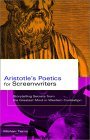
Required reading for this class will include Aristotle's Poetics, iCon: The Biography of Steven Jobs, and Richard Branson's
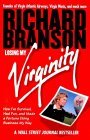
biography Losing My Virginity : How I've Survived, Had Fun, and Made a Fortune Doing Business My Way.
TELL YOUR VENTURE'S STORY:
During the semester you will tell a story. You are the hero entrepreneur in this odyssey, and your dreams are the destination.
Passion for the arts and entrepreneurship are the major prerequisites for this course, and we encourage all writers, filmmakers, poets,
programmers, and musicians to apply! Within this class English majors will work with Physics majors to create new ventures.
Whatever your passion, Dr. E will guide you in devising a plan for pursuing it as a profession.
The course structure is based upon Aristotle's
Poetics and the classical story structures found in Homer's
Iliad and Odyssey, Virgil's Aeneid, Dante's
Inferno, and Exodus, which
have
inspired
thousands of storytellers including George Lucas in the creation of Star Wars and the Wachowski Brothers in the creation of the
Matrix.
Just like Neo and Luke Skywalker, all artists/entrepreneurs must look within for that magic creative inspiration. As the
artist/entrepreneur, you are the hero protagonist in this course, and thus the story falls upon your shoulders as we progress through the
semester. Success will be defined by the course taking you closer to your dreams in arts and entrepreneurship.
Artistic Entrepreneurship 101 Outline: (Based on Joseph Campbell's classic Hero With a Thousand Faces)
The Monomyth is divided into three sections: Departure (sometimes called Separation), Initiation and Return.
This was laid out by Joseph Campbell in the first part
of The Hero with a Thousand
Faces,
"The Adventure of the Hero." His thesis was that all myths follow this
structure to at least some extent. To take three examples: the Christ story
follows this structure almost exactly, whereas the Odyssey features
frequent repetitions of the Initiation section and the Cinderella
story follows this structure somewhat more loosely.
Departure deals with the hero venturing forth on his quest.
Initiation deals with the hero's various adventures along his or her
way. And Return deals with the hero's return home with knowledge and
powers he or she has acquired along the way.
The quest begins with the hero in a state of neurotic anguish. The
quest is often announced to the hero by another character who acts as a
'herald'.
In Star Wars, Luke Skywalker, the hero, begins the story in frustration over
being unable to leave home. The heralds are the two droids who carry a message
from Princess Leia. In The Matrix, the call comes in the form of Morpheus and his followers who
encourage the hero, Neo, to question
reality. In The Lord of the Rings, Gandalf acts as the herald who gives Frodo his mission to destroy the One Ring. Aragorn, in a separate hero's odyssey, is
told by Elrond of his true name and lineage as the Heir of Isildur and rightful heir to the throne of Gondor when he is 20 years of age.
In many stories, the hero initially refuses the call to adventure.
When this happens, the hero suffers somehow, and eventually chooses the
quest.
In Star Wars, Luke is initially uninterested in helping the Rebel Alliance, preferring to stay on the farm; it is only when his foster parents are killed that
he begins the quest. In The Matrix, Neo refuses to take the window washing equipment to escape and is captured by the Agents. In The Lord of the Rings, Frodo is reluctant to
set out on an adventure. Because of his delay he is nearly captured by the Ringwraiths.
The hero eventually must cross into a dark underworld, where he will
face evil and darkness, and thereby find true enlightenment. Before
this can occur, however, the hero must cross the threshold between his
home world and the new world of adventure. Often this involves facing
off against and quelling a 'threshold guardian'.
In Star Wars, the threshold is Mos Eisley,
a spaceport that acts as a doorway between Luke's home planet and the
wider universe; Luke must avoid capture by the threshold guardians, the
imperial stormtroopers. In The Matrix, Neo takes the "red pill". In The Lord of the Rings,
Frodo finally accepts his mission in Rivendell and crosses the
threshold once he leaves there. Also in Rivendell, Aragorn meets Boromir
who tells of the plight that Gondor is now in while at the same time
confronting those present for not aiding Gondor; Aragorn sees that he
must now save Gondor and claim the kingship. In The Odyssey, Odysseus must pass the island of the Sirens. In The Silence of the Lambs,
Agent Starling must enter not only Lecter's hospital, guarded by the
semen-flinging guardian, but also the second threshold of the sealed
storage facility Lecter directs her to.
Having defeated the threshold guardian, the hero finds himself in a
place of darkness where he begins his true adventure, perhaps
discovering his true purpose. This 'belly of the whale' may be an
ambiguous place of dream-like forms. The name for this stage of the monomyth
is based upon the story of Jonah.
In Star Wars, it is the Death Star, in which Luke is
engulfed and in which he learns how to be a hero. In The Lord of the Rings, the Fellowship pases through the abandoned mines of
Moria. In The Matrix, Neo finds himself waking up in a bio-electric cell where he is one of the humans being harvested by the
machines. In The Silence of the Lambs,
Starling finds the serial killer Buffalo Bill's first victim within the dark, womblike storage facility.
Once in the underworld, the hero is repeatedly challenged with
mental and physical obstacles that must be overcome. Often these take
the form of a test, by which the hero improves his skills and proves
his worth.
In The Empire Strikes Back, Luke undergoes his training with Yoda.
Aragorn, after the loss of Gandalf in Moria, must now take the position
of leader of the Fellowship, and struggles to lead them as well as
Gandalf wanted to. In The Silence of the
Lambs, Starling must deal with sexism and her own fear while investigating Buffalo Bill.
After overcoming the Road of Trials, the hero often encounters a
goddess-like woman: beautiful, queenlike or motherly. This is a grand
reward for the hero.
In The Matrix Reloaded, Neo takes
Trinity as a lover. In The Lord of the Rings, Frodo meets Galadriel, who shows him
the future. Aragorn also meets Galadriel, who counsels him on his future actions. In The Silence of the Lambs, Buffalo Bill
kidnaps a senator's daughter and the female senator initially appears as a benevolent, matriarchal force.
However, the Goddess may also negate the hero's progress through lust or greed. This may distract the hero from his ultimate goal and plunge him back into
darkness.
In The Matrix Reloaded, Persephone
attempts to seduce Neo. In The Odyssey, the temptress is the nymph Calypso. In Star Wars, there is tension between Luke and Han Solo over their love for Princess Leia. Luke is also tempted by the dark side itself, as demonstrated by his vision in the cave on Dagobah. In The Lord of the Rings
Frodo is tempted to give the Ring to Galadriel and forsake his mission.
In the Christ story, Satan takes this role (though he would
traditionally be considered a temptor, rather than a temptress). In The Silence of the Lambs, the offer of a reduced sentence for Hannibal Lecter, supposedely authorized
by the senator, is revealed as a trick.
The hero may encounter a father-like figure of patriarchal
authority. 'Father' and 'son' are often pitted against each other for
mastery of the universe. To understand the father, and ultimately
himself, the hero must reconcile with this ultimate authority figure.
In The Empire Strikes Back, Luke confronts Darth Vader
and learns that he is his father; in Return of the Jedi, he is reconciled with the reformed Vader. In The Matrix Reloaded, Neo
meets The Architect, a
program who identifies himself as the father of the Matrix. In The Lord of the Rings, Aragorn must face the legacy of his
ancestor Isildur,
by rising above the darkness where he failed. Aragorn directly faces
this legacy most clearly when he decides to ride the Paths of the Dead
and gain the allegiance of the Army of the Dead, a feat which only the
true Heir of Isildur can perform. In The
Silence of the Lambs, Starling comes to terms with the death of her father through Hannibal Lecter.
The Hero's Ego is disintegrated in a breakthrough expansion of
consciousness. Quite frequently their idea of reality is changed, they
may find themselves able to do new things or able to see a larger point
of view, allowing them to sacrifice themselves.
In The Empire Strikes Back, Luke sacrifices himself rather than turn to the dark side. In The Matrix Reloaded,
Neo destroys several Sentinels in the real world using only his mind.
Aragorn gains command of the immortal Army of the Dead, making his
forces undefeatable. In The Silence of the
Lambs after atonement, Starling gains knowledge from Lecter and must challenge Buffalo Bill on her own.
Having reconciled with the father and achieved personal
enlightenment, the hero's psychological forces are again balanced. His
new found knowledge, or boon, also has potential to benefit society.
In the Christ story, Jesus surrenders himself to the Romans, setting in motion his ultimate fate of crucifixion. In The Lord of the
Rings,
all of the hobbits gain wisdom and experience during their odyssey
which allows them to easily set things right in the Shire on their
return. By calling upon his heritage as the Heir of Isildur to take
command of the Army of the Dead, Aragorn is now more in tune with his
true nature and purpose as rightful heir to the throne of Gondor than
ever before. In The Silence of the Lambs Starling graduates into an agent, her psychological forces balanced despite Lecter's
escape.
A mad dash is made by the hero to return with the prize.
In the Christ story, Jesus carries his cross to Golgotha. In The Matrix Revolutions, Neo takes a ship to the Machine City. In
The Lord of the Rings
Frodo and Sam are rescued from the slopes of Mt. Doom by Gandalf and
the Eagles (which is also a "Rescue from Without"). Aragorn, after
exiting the Paths of the Dead with his new invincible Shadow Army, must
now make a mad dash across Gondor in a race against time to liberate
the coast from an invasion of Corsairs, then lead the Southern army of
Gondor north to save Minas Tirith from destruction, all in only
six days.
The hero may need to be rescued from without by humanity.
In the Christ story, Judas betrays Jesus to the Romans. In The Matrix
Revolutions, Trinity, Morpheus, and Seraph must rescue Neo from his imprisonment in the train station. In The Lord of the
Rings, Frodo is ultimately unable to destroy the Ring without Gollum's unwilling help.
Before the hero can return to the real world, he must confront
another threshold guardian. The first threshold was a symbolic death;
this is now a symbolic rebirth.
In The Matrix Revolutions, Neo again confronts Smith. In Return of the Jedi, Luke again confronts Darth Vader. In The
Lord of the Rings,
the final threshold for the hobbits re-entering the Shire is guarded by
Saruman and his Ruffians. For Aragorn, this means making a final
confrontation with Sauron's forces in a suicidal attack on his massive
army at the Black Gate.
Once the final threshold is crossed, the hero is now free to move
back and forth between the two worlds at will. He has mastered the
conflicting psychological forces of the mind.
In Return of the Jedi, Luke becomes a Jedi. In the Christ story, Jesus is resurrected. In The Lord of the Rings, Aragorn
is crowned King of Gondor and Arnor,
and has defeated Mordor (later re-destributing its conquered lands to
the former slaves that tilled the fields in its southern regions).
Aragorn then marries Arwen,
daughter of his father-figure Elrond, uniting the worlds of Elf and
Man. Finally, Aragorn finds a new sapling of the White Tree of Gondor,
and Gandalf informs him
that he is now leaving Middle-earth now that Sauron is defeated:
Gandalf now officially "passes the torch" of responsiblity for
protecting Middle-earth and its peoples from himself on to Aragon and
his descendants.
With the odyssey now complete, the hero has found true freedom, and can turn his efforts to helping or teaching humanity.
In The Lord of the Rings, the hobbits become prominent
citizens of the Shire with the wisdom they have gained. Aragorn reigns
as King for many decades and ushers in a new age of peace and the
rebuilding of Middle Earth. He then starts a family with Arwen, his
Queen.
"From
Beethoven to Bob Dylan "Every artist
is an entrepreneur." So argues Dr. Elliot McGucken, a visiting
professor at Pepperdine University, in an online
video introduction to his course, Art Entrepreneurship &
Technology 101, which has the professor lecturing from the shore of a
small lake. Among his suggestions for artists who want to be more
entrepreneurial: launch a blog." -Business
Week
ARTS ENTREPRENEURSHIP: HOW TO BE A
HERO
by Mike Vargo
From The Kauffman Foundation's
Thoughtbook
Elliot McGucken has an artful way of teaching entrepreneurship to artists. He explains the
entrepreneurial process, for instance, by comparing it to the classic "hero's odyssey" in myths
and epics. Typically, in the first stage of the story, the hero embarks on a quest that
requires "separation" or "departure" from the familiar world (here McGucken finds strong
parallels to the decision to start a company) -- and after many twists, the odyssey ends with
the hero's "return" (exit strategy).
"Every aspect of classical story, including antagonists, mentors, reversals of fortune, and the
seizing of the sword from the stone, may be found in the realm of entrepreneurship," McGucken
claims. And there's more. The college course he designed -- open to students in any major,
working in any of the visual, literary or performing arts -- mixes classical concepts with
cutting-edge practical advice, such as how to use open-source DRM (digital rights management)
to keep the ogres from snatching your profits.
The course is called Artistic Entrepreneurship and Technology 101. First offered this past
spring at the University of North Carolina in Chapel Hill, with support from the Kauffman
Campuses Initiative, it has drawn rave reviews from students. The core message of AE&T 101 is
that "ideals are real," and in fact are practical: that you don't have to choose between being
a starving artist or selling out. By starting a venture of your own that combines high
artistic standards with sound business principles, you can "rock your dreams," McGucken tells
students; he says that in the arts as in business, pursuing "fundamental value" pays off.
McGucken began his career in science. In the late 1990s he was a promising young physics
researcher with a faculty position at Davidson College. But he wrote on the side and had long
loved classical literature, from the Greeks to the great novelists. Feeling that these got
too little attention nowadays he had launched a Web site, jollyroger.com, to host online forums
about the Great Books and to offer his own commentary. And lo, the quest drew eyeballs.
Before long, he says, "the advertising income from jollyroger was more than I was making from
my professorship."
By the 2005-06 academic year McGucken was involved with several more arts-related Internet
ventures while teaching physics part-time at UNC in Chapel Hill. There the Kauffman Campuses
mission to teach entrepreneurship in all fields inspired his creation of the AE&T course, which
immediately had the look of an idea whose time had come: more than 110 students applied for
40 seats.
Those chosen included undergrads from the liberal and fine arts, plus artistically oriented
computer-science students, MBAs, and a law student. They combined their skills on projects,
actually starting arts ventures or moving them along. Some showed up with ventures well under
way, like Will Hackney, a freshman with over a dozen local bands signed to a record label he'd
started in high school. Pierce Freelon, an African-American Studies major and member of a
hip-hop duo called Language Arts, was branching into ventures ranging from a Web site on
"blackademics" to the design of a hip-hop curriculum for K-12 schools.
And some were talented artists who hadn't yet turned entrepreneurial. Hannah Sink, a student
filmmaker who had shot two documentaries in Thailand with grant funding, recalls: "I just had
the idea that one day, maybe in fifteen or twenty years, I'd like to start my own production
company. What I learned is that I can start taking the steps now. So for me this course was
about homing in on a desire I already had, and learning the tangible things: forming an
L.L.C., protecting your rights, using technology." During the course Sink and a colleague,
Hope Blaylock, started Continuous Take Productions. The firm is still embryonic but the main
thing, says Sink, is that "this is real. We know where we are in the process. If and when we
take the next steps, we know what we have to do."
Elliot McGucken, meanwhile, has carried AE&T 101 over to Pepperdine University, where he's a
visiting professor for 2006-07. Replication and expansion of the course has thus begun, and
McGucken has a larger reason for hoping the effort will grow. He sees much of today's cultural
industry as being in a "decadent state," with big media firms giving us low-grade movies, books
and other product even in the face of declining revenues: "When you put the bottom line above
high ideals, both suffer," he says. But a new wave of artist/entrepreneurs -- armed with the
skills to assert artistic control by starting and controlling businesses -- could help turn
things around. "There's an opportunity," McGucken says, "for a cultural renaissance."
"The human soul, as Thomas Aquinas defined it, is the "form of the
body,"
the vital power animating, pervading, and shaping an individual from the
moment of conception, drawing all the energies of life into a unity..
In our temporal world, the soul of capitalism is the vital power that
has animated, pervaded, and shaped our economic system, drawing all of
its energies into a unity. In this sense, it is no overstatement to
describe the effort we must make to return the system to its proud roots
with these words: the battle to restore the soul of capitalism."
--John C. Bogle, The Battle for The Soul of Capitalism
How one carries on in the face of unavoidable catastrophe is a matter of
temperament. In high school, as was custom, I had chosen a verse by
Virgil to be my motto: Tu ne cede malis sed contra audentior ito. Do not
give in to evil, but proceed ever more boldly against it. I recalled
these words during the darkest hours of the war. Again and again I had
met with situations from which rational deliberation found no means of
escape; but then the unexpected intervened, and with it came salvation.
I would not lose courage even now. I wanted to do everything an
economist could do. I would not tire in saying what I knew to be true.
--Ludwig von Mises, Notes and Recollections, p. 70
Those fighting for free enterprise and free competition do not defend
the interests of those rich today. They want a free hand left to unknown
men who will be the entrepreneurs of tomorrow. --Ludwig Von Mises
The tragedy of collectivist thought is that, while it starts out to make
reason supreme, it ends by destroying reason because it misconceives the
process on which the growth of reason depends. It may indeed be said
that it is the paradox of all collectivist doctrine and its demands for
"conscious" control or "conscious" planning that they necessarily lead
to the demand that the mind of some individual should rule
supreme--while
only the individualist approach to social phenomena makes us recognize
the superindividual forces which guide the growth of reason.
Individualism is thus an attitude of humility before this social process
and of tolerance to other opinions and is the exact opposite of that
intellectual hubris which is at the root of the demand for comprehensive
direction of social purpose. --F.A. Hayek, The End of Truth, The Road
to
Serfdom
Let no one ignorant of geometry enter. --engraved on
the door to Plato's Academy
The true work of art is but a shadow of the divine perfection.
-- Michelangelo
Luck is not chance, it's toil; fortune's expensive smile is earned.
--Emily Dickinson
"Even more significant of the inherent weakness of the collectivist
theories is the extraordinary paradox that from the assertion that
society is in some sense more than merely the aggregate of all
individuals their adherents regularly pass by a sort of intellectual
somersault to the thesis that in order that the coherence of this
larger entity be safeguarded it must be subjected to conscious
control, that is, to the control of what in the last resort must be an
individual mind. It thus comes about that in practice it is regularly
the theoretical collectivist who extols individual reason and demands
that all forces of society be made subject to the direction of a
single mastermind, while it is the individualist who recognizes the
limitations of the powers of individual reason and consequently
advocates freedom as a means for the fullest development of the powers
of the interindividual process." --Nobel Laureate Economist F.A. Hayek
It is far more difficult to murder a phantom than a reality.
--Virginia Woolf
Our peculiar security is in possession of a written Constitution. Let
us not make it a blank paper by construction. --Thomas Jefferson
The most recent episode witnessed the culmination of an era in which our
business corporations and our financial institutions, working in tacit
harmony, corrupted the traditional nature of capitalism, shattering both
confidence in the markets and the accumulated wealth of countless
American families. Something went profoundly wrong, fundamentally and
pervasively, in corporate America. . . . At the root of the problem, in
the broadest sense, was a societal change aptly described by these words
from the teacher Joseph Campbell: "In medieval times, as you approached
the city, your eye was taken by the Cathedral. Today, it's the towers
of commerce. It's business, business, business." We had become what
Campbell called a bottom-line society. But our society came to measure
the wrong bottom line: form over substance, prestige over virtue, money
over achievement, charisma over character, the ephemeral over the
enduring, even mammon over God. --The Battle for The Soul of
Capitalism,
by John C. Bogle
Artistic Entrepreneur- ship will be offered through the Business Administration department. Please contact Dr. Elliot McGucken with a brief
statement summariz- ing your vision for an artistic venture or
career in the arts and/or technology, and please include your student ID. I wish there were room for everyone, but space is
limited. We'll be hosting events above and beyond the class, including a party in November featuring local bands, DJ's, films, art, and
photography, so stay tuned! Feel free to contact me with any questions.
All logos and trademarks in this site
are property of their respective owner. The comments are property of their posters, all the rest (c) 2004 by me This web site was
made with PostNuke, a web portal system written in PHP. PostNuke is Free Software released under the
GNU/GPL license. You can syndicate our news using the file backend.php


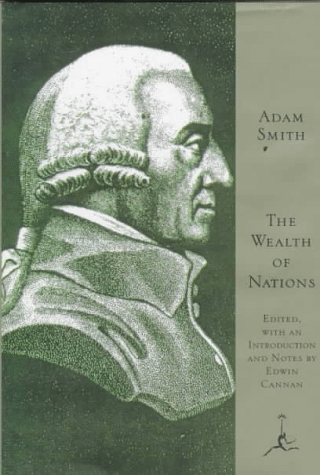
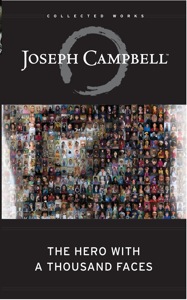 Joseph Campbell's


 Princeton Club of Southern California: Hero's Odyssey
Renaissance Festival: Ideals in
Innovation:
Princeton Club of Southern California: Hero's Odyssey
Renaissance Festival: Ideals in
Innovation: 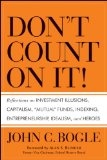
 Don't Count on It! Reflections on
Investment
Illusions, Capitalism, "Mutual" Funds, Indexing,
Entrepreneurship, Idealism, and Heroes : "Vanguard: Saga of
Heroes (Chapter 23) presents a very different interpretation than
you might expect from its title. This chapter is based on a lecture I
presented to Pepperdine University (CA) students, at the request of
Professor Elliot McGucken, as part of his course The Hero's Odyssey
in Arts Entrepreneurship & Technology 101. "Dr. E" relies heavily
upon such classics as Homer's Odyssey and Dante's Inferno,
and honors me by including with these classics my own The Battle for
The Soul of Capitalism. This essay focuses on Vanguard's odyssey, a
voyage punctuated with challenges, narrow escapes, and ultimate
fulfillment. I conlude by urging introspection upon our financial
leaders, an idea that failed to get much traction back in 2007 when it
might have helped. But these leaders were simply making too much money,
taking too much risk, and showing too little concern about the crises
then building. . . -p. 436: "It's no mean task to measure up to the high
appraisal of my career
that
has been so generously expressed by Dr. Elliot McGucken. That he has,
remarkably, placed my 2005 book, The Battle for the Soul of
Capitalism, on the same reading list as The Odyssey--let
alone the same planet!--adds even more to my burden in meeting the
expectations of those who are aware of this background. . ."
--Vanguard,
Saga of Heroes, p. 469, Don't Count on It published 2010 by
John Wiley & Sons
Don't Count on It! Reflections on
Investment
Illusions, Capitalism, "Mutual" Funds, Indexing,
Entrepreneurship, Idealism, and Heroes : "Vanguard: Saga of
Heroes (Chapter 23) presents a very different interpretation than
you might expect from its title. This chapter is based on a lecture I
presented to Pepperdine University (CA) students, at the request of
Professor Elliot McGucken, as part of his course The Hero's Odyssey
in Arts Entrepreneurship & Technology 101. "Dr. E" relies heavily
upon such classics as Homer's Odyssey and Dante's Inferno,
and honors me by including with these classics my own The Battle for
The Soul of Capitalism. This essay focuses on Vanguard's odyssey, a
voyage punctuated with challenges, narrow escapes, and ultimate
fulfillment. I conlude by urging introspection upon our financial
leaders, an idea that failed to get much traction back in 2007 when it
might have helped. But these leaders were simply making too much money,
taking too much risk, and showing too little concern about the crises
then building. . . -p. 436: "It's no mean task to measure up to the high
appraisal of my career
that
has been so generously expressed by Dr. Elliot McGucken. That he has,
remarkably, placed my 2005 book, The Battle for the Soul of
Capitalism, on the same reading list as The Odyssey--let
alone the same planet!--adds even more to my burden in meeting the
expectations of those who are aware of this background. . ."
--Vanguard,
Saga of Heroes, p. 469, Don't Count on It published 2010 by
John Wiley & Sons
 The Hero's Odyssey in Arts Entrepreneurship & Technology: Web 2.0/3.0
Arts Entrepreneurship: Make Your
Passion Your
"Profession: Dr. E @ SXSW:
Don't need no VC when you've got a PC." Not only has technology
revolutionized the production and distribution of content, but it has
also allowed indie creators to bypass traditional MBAs to define
the rights fortheir creations and reap maximum profits. The
Constitution states that creators own their creations--so now what's the
best way for creators to share, sell, and profit? From Open Source CMS
to online incorporation to web 2.0/3.0 to the registering of patents,
trademarks, and copyrights, this is a panel for the indie creator.
Lecturer: Elliot McGucken Pres, 45Surf
The Hero's Odyssey in Arts Entrepreneurship & Technology: Web 2.0/3.0
Arts Entrepreneurship: Make Your
Passion Your
"Profession: Dr. E @ SXSW:
Don't need no VC when you've got a PC." Not only has technology
revolutionized the production and distribution of content, but it has
also allowed indie creators to bypass traditional MBAs to define
the rights fortheir creations and reap maximum profits. The
Constitution states that creators own their creations--so now what's the
best way for creators to share, sell, and profit? From Open Source CMS
to online incorporation to web 2.0/3.0 to the registering of patents,
trademarks, and copyrights, this is a panel for the indie creator.
Lecturer: Elliot McGucken Pres, 45Surf
 I.D.E.A. to Exit: An Entrepreneurial Odyssey: Author and
Professor Elliot McGucken, Ph.D. describes
the entrepreneurial process to his arts students through an analogy to
ancient literature. He describes the first stage of the entrepreneur
and that of the classic "hero" story as a odyssey in which the hero, or
entrepreneur, "embarks on a quest that requires separation and
departure
from the familiar world.. . . The entrepreneur moves into the unknown
and the unproven. . ." Departure from the familiar is what keeps many
from not exploring their entrepreneurial world at all. --Jeffrey Weber:
I.D.E.A. to Exit: An Entrepreneurial Odyssey, p. 3, (Published
2010 by Mill City Press)
I.D.E.A. to Exit: An Entrepreneurial Odyssey: Author and
Professor Elliot McGucken, Ph.D. describes
the entrepreneurial process to his arts students through an analogy to
ancient literature. He describes the first stage of the entrepreneur
and that of the classic "hero" story as a odyssey in which the hero, or
entrepreneur, "embarks on a quest that requires separation and
departure
from the familiar world.. . . The entrepreneur moves into the unknown
and the unproven. . ." Departure from the familiar is what keeps many
from not exploring their entrepreneurial world at all. --Jeffrey Weber:
I.D.E.A. to Exit: An Entrepreneurial Odyssey, p. 3, (Published
2010 by Mill City Press)
 Jack Bogle: Founder and Former CEO of Vanguard:
(Dr. E's) course The
Hero's Odyssey in Artistic
Entrepreneurship and Technology is an inspiring tribute to the
relevance
of classical ideals in our modern lives. --Jack Bogle in his book
Enough True Measures of
Business, Money, and
Life, Wiley 2008
Jack Bogle: Founder and Former CEO of Vanguard:
(Dr. E's) course The
Hero's Odyssey in Artistic
Entrepreneurship and Technology is an inspiring tribute to the
relevance
of classical ideals in our modern lives. --Jack Bogle in his book
Enough True Measures of
Business, Money, and
Life, Wiley 2008
 Dr. E wrote the introduction to the 2010 book
Disciplining
the
Arts: Teaching Entrepreneurship in Context by Dr. Gary D.
Beckman, published by Rowman & Littlefield Education, 2010
Dr. E wrote the introduction to the 2010 book
Disciplining
the
Arts: Teaching Entrepreneurship in Context by Dr. Gary D.
Beckman, published by Rowman & Littlefield Education, 2010
 2010 Webster's Technology Quotations, Facts, and Phrases:
 The University of Cape Town Graduate School of
Business: The art of entrepreneurship: There is an increasing
attention on the concept of artists as entrepreneurs emerging globally
-- artists are becoming more business savvy and finding new ways of
sustaining their artistic livelihood. Artists of all kinds are applying
their creativity in new ways as businesspeople, and proving that it is
possible to leave the "starving artist" notion behind in favour of the
"business savvy artist." In the US, the New York Times recently
picked up on this trend, and in a
feature presented some successful artists changing the game. According
to Elliot McGucken who teaches the course Artist Entrepreneurs at the
University of North Carolina, the advancement of business skills "rests
on the principle that those who create art should have the skills to own
it, profit from it and protect it. . . It's about how to make your
passion your profession, your avocation
your vocation, and to make this long-term sustainable," he says.
This business imperative to the world of the arts has become all the
more important in the past year, as the recession has not left the art
world unscathed . while most of the media attention is on corporates,
the plight of the arts is an important issue that needs addressing as
well.
The University of Cape Town Graduate School of
Business: The art of entrepreneurship: There is an increasing
attention on the concept of artists as entrepreneurs emerging globally
-- artists are becoming more business savvy and finding new ways of
sustaining their artistic livelihood. Artists of all kinds are applying
their creativity in new ways as businesspeople, and proving that it is
possible to leave the "starving artist" notion behind in favour of the
"business savvy artist." In the US, the New York Times recently
picked up on this trend, and in a
feature presented some successful artists changing the game. According
to Elliot McGucken who teaches the course Artist Entrepreneurs at the
University of North Carolina, the advancement of business skills "rests
on the principle that those who create art should have the skills to own
it, profit from it and protect it. . . It's about how to make your
passion your profession, your avocation
your vocation, and to make this long-term sustainable," he says.
This business imperative to the world of the arts has become all the
more important in the past year, as the recession has not left the art
world unscathed . while most of the media attention is on corporates,
the plight of the arts is an important issue that needs addressing as
well.